Monday, January 08, 2007

Jerry's Turn

Movie prequels are rarely a good idea, and one of the weirdest was definitely 1972's The Nightcomers, an attempt by director Michael Winner (Death Wish) to show the events leading up to the events of Henry James' famous ghost story, The Turn of the Screw. In this case, the explanation involves lots of S&M with Marlon Brando and Stephanie Beacham. Not good, really, but certainly interesting. Easily the best thing about the film is the score by the late and highly underrated Jerry Fielding, who's better known for his dissonant work with directors like Sam Peckinpah (The Wild Bunch) and Clint Eastwood (The Outlaw Josey Wales). The music here is very lyrical and melodic, one of his strongest and most unusual achievements.

Sorry, link removed - an expanded CD is now commercially available.

Labels: ,

Wednesday, November 15, 2006

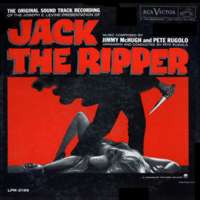
Saucy Jack

One of the more notorious horror films of the late '50s, the Baker & Berman version of Jack the Ripper presents a vicious take on the infamous Whitechapel killings with a style foreshadowing the imminent giallo craze, including a color insert climax in an elevator shaft that no viewer ever forgets. Joseph E. Levine released this one in the U.S. and decided to chuck out the British score by Stanley Black (currently available on CD), replacing it with the odd team of jazz composer Pete Rugolo (Thriller, Sanford and Son) and old school musical veteran Jimmy McHugh ("I'm in the Mood for Love"). As you might expect, the results are pretty fascinating...

Jack the Ripper (U.S. score)
1. Main Title (Jack The Ripper Theme)
2. Love Theme (Lowry Dates Ann)
3. Killed In The Elevator
4. Ann Is Chased

5. Ripper Kills Gateman
6. Mary Clarke Theme
7. To the Operating Room (And End Title)
8. Ripper Gets Mary Clarke
9. Ann And Mary
10. Chase The Hunchback
11. Barmaid Starts Home (And Can-Can Scene)
12. Ann Is Trapped

13. Kitty
14. Blood On My Hands (and End Cast)

Labels:

Wednesday, October 11, 2006

Around the World on a Night Train

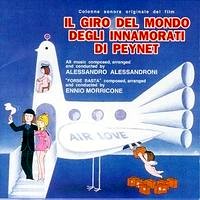
Same theme, two very different movies! In 1974, Raymond Peynet's whimsical book Il giro del mondo degli innamorati di Peynet (or "Peynet's Loves around the World") was adapted as a seldom-seen animated feature. Though the film runs less than an hour and a half, its soundtrack features a huge amount of music with full scores written by both Ennio Morricone and his frequent collaborator (and choir leader), Alessandro Alessandroni (the whistling guy on many Morricone spaghetti westerns). Morricone's pieces are numbered variations on "Forse Basta," with the first a particular standout. Its memorable vocal version, "A Flower's All You Need," is performed in the film by Egyptian-born crooner Demis Roussos, who's still a big international favorite. The score by Alessandroni (who did The Devil's Nightmare around the same time) is equally good, with the stunning "San Pietro" especially worthwhile.

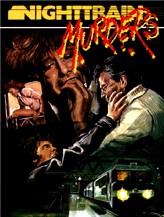
Well, since nobody bothered to see the movie, Morricone was fond enough of the Roussos theme to use it again one year later when he was brought on board for Night Train Murders, a particularly savage and effective Italian riff on Last House on the Left by director Aldo Lado. This time the song plays out over the opening credits, with two ruffians mugging Santa Claus! The other two score cues are eerie stuff, with a harmonica used to particularly chilling effect.

Ennio Morricone
Night Train Murders
1. L'Ultimo Treno Della Notte
2. Coincidenze
3. A Flower's All You Need (Vocal: Demis Roussos)
Il giro del mondo degli innamorati di Peynet
4. Forse Basta 1
5. Forse Basta 2
6. Forse Basta 3
7. Forse Basta (Original Main Titles)
8. Forse Basta 4
9. Forse Basta 5
10. Forse Basta 6
11. Forse Basta 7
12. Forse Basta 8
13. Forse Basta 9
14. Forse Basta 10

Alessandro Alessandroni
Il giro del mondo degli innamorati di Peynet
1. Amore E Birra
2. Sirtaki Die Colonelli
3. I Pattinatori Di Bruegel
4. Invito A Corte
5. I Baronetti
6. Marinara
7. Fiori Gialli
8. Dal Tirolo Con Affetto
9. Deserto Di Elam
10. Serata Al Bolscioi
11. Tramonto Romano
12. Montmartre
13. Bethlem
14. Latino Americana
15. Venerd Santo A Siviglia
16. Chi Vuol Esser Lieto Sia
17. Made In USA
18. San Pietro
19. Piazza Rossa
20. Deserto Di Elam (Movie Version)
21. Sirtaki Dei Coloneli
22. Invito Al Corte (Alternate Version)
23. Bethlem (Alternate Version)
24. Fiori Gialli (alternate version)
25. Made in USA (alternate version - Spaghetti Western)
26. Made In USA (Alternate Version)
27. Made in USA (alternate version)
28. I Pattinatori Di Bruegel (Short Version)
29. Made in USA (alternate version) 2
30. I Baronetti (Alternate Version)

Labels: , , ,

Monday, October 09, 2006

Rise and Shine

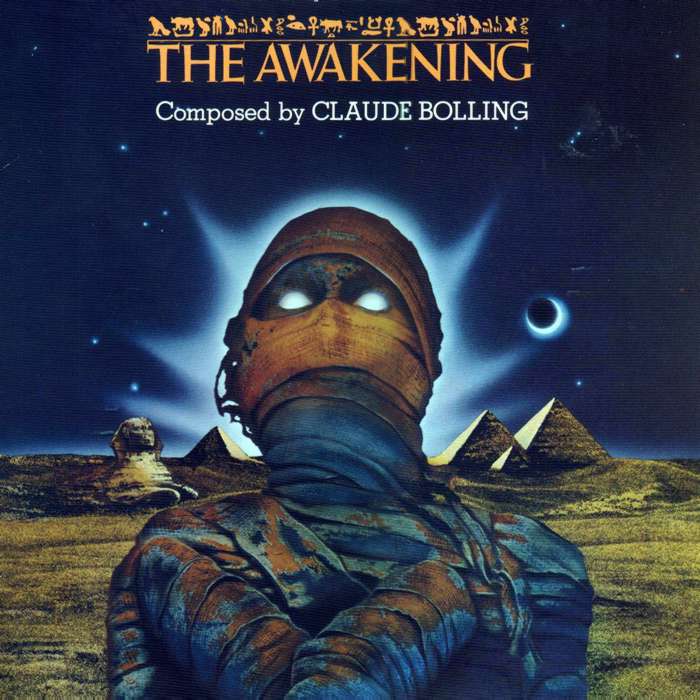
One of the more high-profile studio horror films in 1980, The Awakening quickly ticked off a lot of mummy fans with its poster image of a cloth-wrapped fiend emerging from a pyramid. However, this adaptation of Bram Stoker's The Jewel of Seven Stars (previously filmed by Hammer as Blood from the Mummy's Tomb) -- meant to cash in on the still-active public interest in King Tut -- skimps on the mummy mayhem, instead focusing on a series of bloody deaths and possessions unleashed after Charlton Heston opens an Egyptian princess' sacreb tomb. This was the feature directorial debut of Mike Newell, who went on to a series of high-profile British dramas and comedies before eventually returning to fantastic cinema with Harry Potter and the Goblet of Fire. One of The Awakening's strongest assets is its fine, lyrical score by jazz favorite Claude Bolling, who turns in a rich orchestral work with a beautiful, shimmering main theme.

The Awakening
1. Main Title
2. She Has A Name
3. Night Drive
4. The Big Revelation & Descent

5. Kara Takes Control
6. The Eclipse
7. Margaret's Decision / The Mirror
8. Corbeck's Party
9. Inside Kara's Tomb
10. Canopic Jars
11. Jane's Discovery / Jane's Betrayal
12. The Big Drop
13. The Ceremony
14. Queen Kara

Labels: ,

Monday, October 02, 2006

Feminist Fear

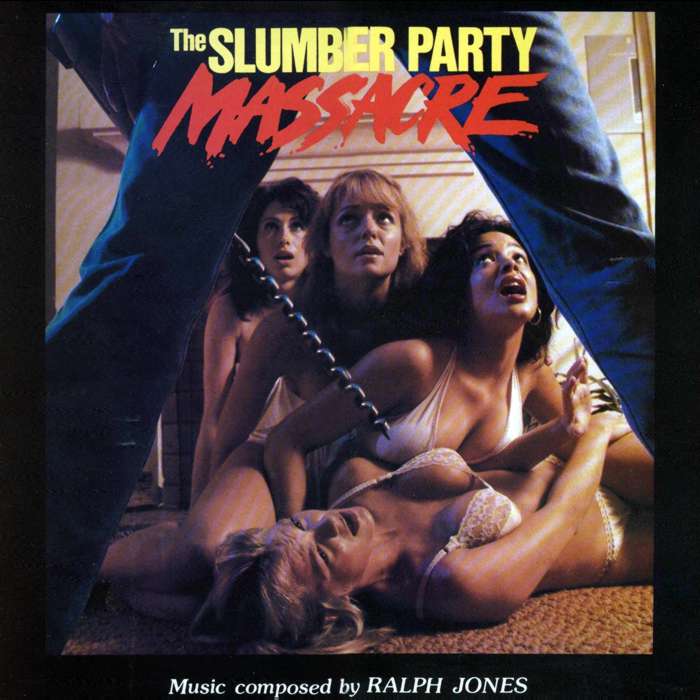
Sometimes, Mr. Freud, a drill is just a drill... Lots of critics have spilled ink over the years trying to find clever gender-related messages in 1982's indie slasher hit, The Slumber Party Massacre, which was written and directed by two women, namely noted feminist writer Rita Mae Brown (Rubyfruit Jungle) and Amy Jones (future writer of Indecent Proposal and Beethoven -- yes, the dog movie). The movie's packed with the usual gore, T&A, and awful acting, but it's fast-paced and full of retro goodness; for any deeper meaning than that, well, you're on your own. The nutty electronic music score is loaded with pseudo-organ riffs that would be more at home in a William Castle movie, and there's even a seven-minute droning freakout piece ("Meditation on the Mind of Russ Thorn"-- that's the killer, natch). It was composed by Ralph Jones, presumably related to the director somehow (brother? husband?), who went to score her Love Letters for Roger Corman as well. Attentive viewers may also note that the actual movie comes sprinkled with a bit of Pino Donaggio's Piranha score for some reason, too. It later inspired two unrelated sequels, both of them completely insane.

The Slumber Party Massacre
1. Main Title
2. Stalking The High School
3. Confrontation In The Gymnasium
4. Russ Dreams
5. Snail Hunt
6. Valerie Does Battle
7. Uninvtied Guest
8. Meditation Of The Mind Of Russ Thorn
9. End Titles

Labels: ,

Monday, September 25, 2006

Music for Muffy

Okay, it's not even close to April right now, but to get folks into the Halloween spirit a little early, here's Charles Bernstein's excellent, diverse little score for one of the most underrated '80s horror films, April Fools' Day (which is usually classified as a slasher film, even though it's not at all). Nice direction by the much-missed Fred Walton (When a Stranger Calls), a dream '80s cast including Amy Steel and Deborah Foreman, and that cool twist ending make this highly recommended. Later ripped off shamelessly in 2005 by the painfully stupid Cry_Wolf; stick with the original.

Labels: ,

Monday, September 18, 2006

Norman, Is That You?

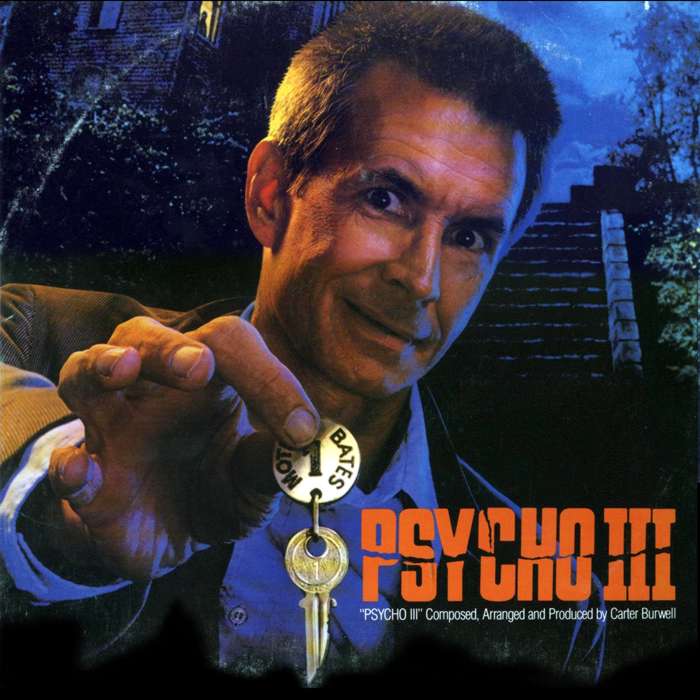
A lot of people were surprised when 1982's dreaded "who asked for it?" sequel, Psycho II, turned out to be pretty decent and a modest box-office success. Naturally, Universal sensed the potential for a new franchise (a term they still slap on almost every DVD they release) and allowed star Anthony Perkins to hop into the director's chair for the next installment, 1986's Psycho III. The result was a beautiful, perverse study of dangerous psychology (despite some studio-imposed slasher additions), with an emotionally-scarred nun (Diana Scarwid) winding up at the Bates Motel and turning Norman's homicidal tendencies upside down. Closer to the Italian gothics than Hitchcock, it's a twisted treat worthy of rediscovery. The equally haunting music comes from Carter Burwell (his second score after Blood Simple), who hit the big time as the Cohen Brothers' regular composer (Fargo, Miller's Crossing, etc.) along with other excellent work like Being John Malkovich, Fear, and Rob Roy. The main theme here ("Maureen in the Desert") is powerful stuff and will stick in your head for days; it's been sampled a surprising number of times in electronica and chill-out pieces the past few years, though the soundtrack itself never hit CD and remains strangely obscure.

Psycho III
1. Maureen in the Desert
2. Before And After Shower
3. Warm As A Cry For Help
4. Sisters / Catherine Mary
5. Mother?
6. Bad Boys And Body Bags
7. Revenge Of A Thankless Child
8. Electroshock Waiting Room
9. Dirty Street
10. Scream of Love

Labels: ,

Friday, September 08, 2006

The Power of Chris Compels You

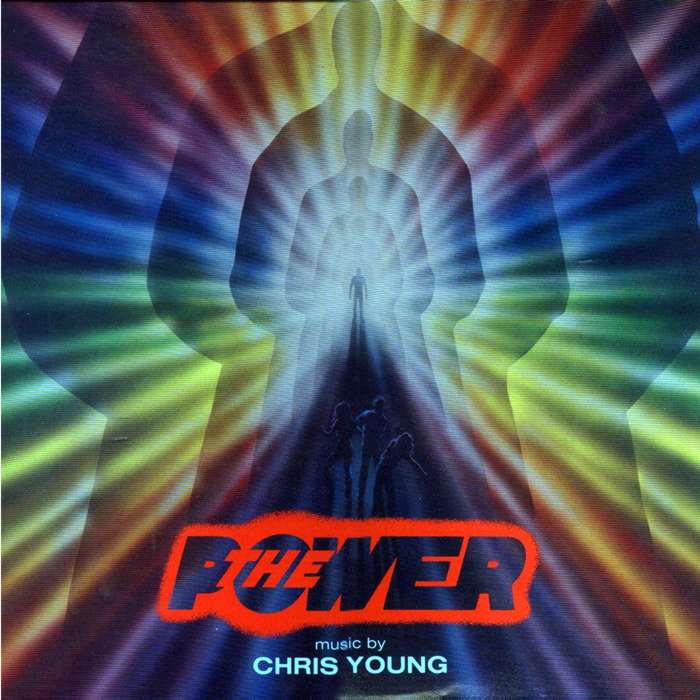
One of the best and busiest current American score composers, Christopher Young has churned out an amazing body of work for films such as Hellraiser, The Grudge, Species, and Flowers in the Attic. However, he got his start with two low-budget genre films for Stephen Carpenter and Jeffrey Obrow, 1982's The Dorm that Dripped Blood (a.k.a. Pranks) and 1984's The Power; while the former has subsequently appeared on CD, The Power has remained out of reach for most listeners. It's very strong for a second score, from the melodic opening water music theme to the driving suspense cues at the end. Note that Track 16 also offers an early example of Young's fondness for goofy puns in his track titles. The film itself, basically a more violent remake of that Brady Bunch Hawaiian episode, follows the mayhem caused by an evil Aztec doll that controls its owners. Tough to find on video now, it's an interesting artifact from the days of homegrown theatrical horror films.

The Power
1. Theme From The Power
2. Main Title
3. Desert Twilight
4. Transformation
5. A Secret Revealed
6. Quest For The Idol
7. Innocent Obsession
8. Evil Passage
9. The Possessed
10. Destacatyl
11. Desperate Search
12. Julie's Magic
13. Night Magic
14. Midnight Excursion
15. Tombstones And Talismans
16. Jerry's Gold Myth
17. The Power

Labels: ,

Tuesday, August 29, 2006

A Different Kind of Animal

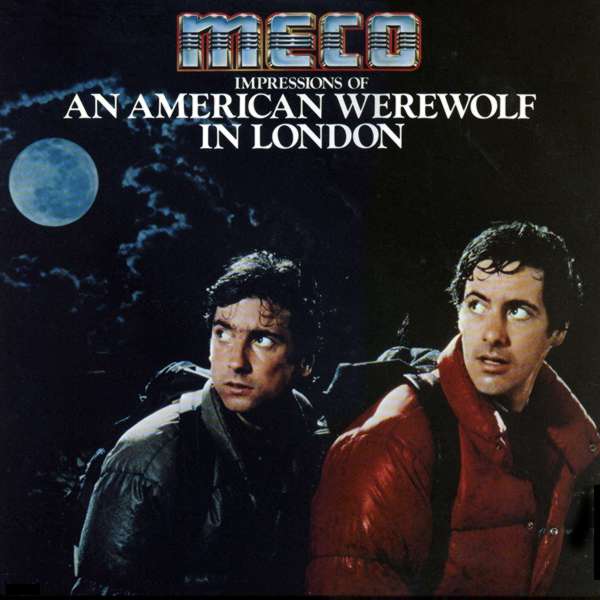
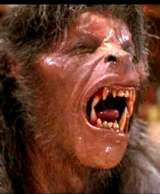
And the beat goes on... Near the end of the disco era, dancefloor sensation Meco (real name: Meco Monardo) was still riding high on his funked-up versions of music from Star Wars, The Empire Strikes Back, Close Encounters of the Third Kind, and a wild concept album based on The Wizard of Oz. Meanwhile John Landis was set to release his first all-out horror film in 1981, An American Werewolf in London, whose soundtrack consisted of some tongue-in-cheek "moon" rock standards along with about five minutes of incidental music by Elmer Bernstein. Faster than you can say "A naked American man stole my balloons," Landis and the execs at Polygram resolved the problem of releasing a soundtrack by bringing in Meco to pad the whole thing out, tweaking the songs with a few werewolf sound effects, tossing in some extra rock tracks, and adding two original "power dance rock" werewolf songs at the end. The result is a solid contender for the weirdest horror soundtrack ever released.

An American Werewolf in London
1. Blue Moon
2. You Gotta Hurt Me
3. Moon Dance
4. The Boys
5. Bad Moon Rising
6. No More Mr. Nice Guy
7.
Werewolf (Loose in London)
8. Werewolf Serenade

Labels: ,

Friday, August 25, 2006

Led Zeppelin Goes Slasher

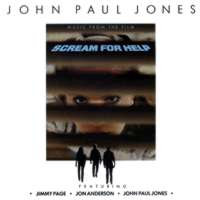
Between his two notorious Death Wish sequels, director Michael Winner decided for some reason to tackle Scream for Help, a 1984 indie horror-thriller that sat on the shelf for a while before going to home video. The script by Tom Holland (Fright Night) predates the superior The Stepfather by a few years in its story of a teenage girl who can't get anyone to believe her mom's new husband is a psycho, but Winner sleazes things up to a ridiculous degree with loads of sex, gore, and gratuitous profanity. Check it out if you can still find a copy. The soundtrack album hit shelves long before the movie, probably because it was composed by Led Zeppelin's John Paul Jones (with some assistance from Yes' Jon Anderson and, fresh from Death Wish II, fellow Zeppelin member Jimmy Page). You'd be hard-pressed to peg this as a horror soundtrack, but it's still a lot of synth-slathered fun.

Labels: ,

Friday, August 18, 2006

They Know Who You Are

One of the more interesting non-slasher '80s horror films, John Schlesinger's The Believers was promoted as the next great modern urban horror film in the tradition of The Exorcist. Unfortunately some much-discussed last minute edits blunted the story (and ticked off a lot of Santeria practitioners in the process), but the end result is still effective and creepy if you go along with it. Martin Sheen stars as a recently widowed Manhattanite who becomes the target of a malicious cult, with sweaty cop Jimmy Smits warning him of impending danger. Helen Shaver also stars and has a scene involving her complexion no viewer ever forgets. The powerful, very scary score is by J. Peter Robinson, a talented and still-busy composer who had just finished The Wraith and The Gate. Don't listen to it alone!

The Believers
1. Jogging / Cal's Theme / Safety
2. Sacrifice (Main Title)
3. Discovery In Central Park
4. Jessica / Hospital / Cal And Jessica
5. Toyland
6. Cal Remembers Lisa
7. Theatre
8. Sanctuary
9. Cal Drives To McTaggart's / McTaggart's Death
10. Boils / Spiders
11. Retribution And End Title

Labels: ,

Friday, August 11, 2006

Basketball with BB

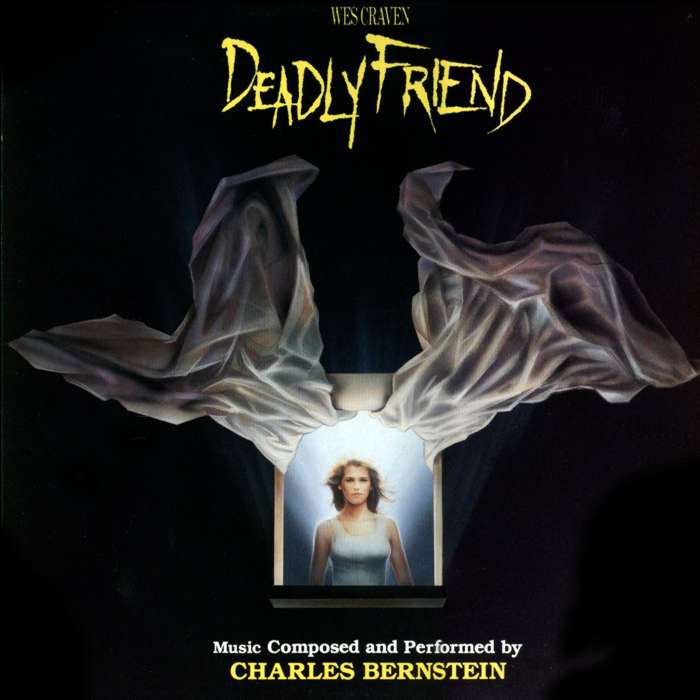
A number of folks have been requesting music from the underrated Charles Bernstein, so here's the first one to make you happy. Way back in 1986, Bernstein and director Wes Craven were fresh off the iconic A Nightmare on Elm Street and teamed up again for Craven's first real studio film, Deadly Friend. The story follows the attempts of a tormented teen scientist (Matthew Laborteaux) to revive the pretty dead girl next door (future skating celeb/gossip favorite Kristy Swanson) by implanting a chip from his pet robot, BB. Not surprisingly, things go very badly afterwards. Unfortunately Warner Brothers wasn't too keen on this tragic, mildly creepy teen love story and insisted on a number of ridiculous changes, including a junky, nonsensical ending. The final result has its share of tampering issues (heck, what '80s Craven movie doesn't?) but still has its good points, namely Bernstein's appropriately electronic-heavy score and a classic gore gag involving cranky Anne Ramsay and a very powerful basketball. For some reason a good chunk of music (including the opening titles!) never made it onto the soundtrack, so if that much-promised CD release ever comes to pass, let's hope it's an expanded special edition. In the meantime, enjoy this tasty dose of '80s synth-horror... and brace yourself for "BB's Song." (Oh yeah, and I was dismayed to just discover my LP of Bernstein's excellent Gator score is in less-than-prime condition; if anyone has a clean rip handy, please share!)

Deadly Friend
1. BB's Theme
2. BB's Song
3. Love Waves
4. Halloween
5. BB's Funeral
6. Hot Head In Bed
7. Back Porch Romance
8. Elvira, Mad Again
9. Nutcracker Street
10. Daddy Dearest
11. Slam Dunk
12. BB Gunned
13. Goodnight Kiss
14. Change of Minds
15. Just Choking
16. Born Again

17. Spotting Pop
18. Body Snatchers

Labels: ,

Wednesday, August 09, 2006

Two Evil Cats

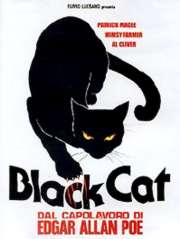
Meow! Here's a strange anomaly in film score history -- an Italian composer who scored the same horror story twice within a decade. It all started when Pino Donaggio (taking a break from his stampede of Brian De Palma films) was hired by the very busy Lucio Fulci in 1981 to score his "freely adapted" version of Edgar Allan Poe's short story, "The Black Cat." Patrick Magee stars as a grizzled old coot who records ambient noises in graveyards and owns a malicious pussycat capable of instigating gory deaths in a small Scottish village. Enter nosy reporter Mimsy Farmer and detective David Warbeck, who try to put a stop to all the feline antics before they're next. It all ends with some impromptu masonry and a yowling kitty, of course. The string-heavy score is highlighted by a terrific main title theme that nicely evokes the Scottish setting and features some of Donaggio's strongest suspense work. Though it was never released, the complete score is presented here from the original recording sessions; sound quality is a bit erratic here and there, but hey, where else are you gonna hear it?
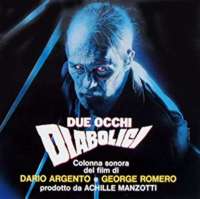
Fast forward to 1990, as Dawn of the Dead producer Dario Argento decided to reunite with George Romero for a two-part Poe anthology film, Two Evil Eyes. While most viewers agree that Romero's "The Facts in the Cast of M. Valdemar" is a sluggish mess, Argento's version of "The Black Cat" succeeds thanks to an avalanche of wild Poe references and a solid performance by Harvey Keitel. Not surprisingly, Donaggio's score is divided into two halves with the much stronger Argento segment coming first. Highlights include the main kid's choir theme ("Dreaming Dreams"), a spooky medieval piece ("Adust Sponsus"), and even a swirling cue inspired by Philip Glass ("The Gothic Town"). Argento must have been pleased with the results, as he used Donaggio again for Trauma and Do You Like Hitchcock? Incidentally, at least one other Italian composer has performed the same twice-in-a-decade feat with one horror story; can you name him?

Labels: , , , ,

Thursday, August 03, 2006

Scream Amen, Somebody

Here's another super-rare goodie from the AIP vaults -- the unreleased jazz-horror score for 1969's Scream and Scream Again, the bizarre Gordon Hessler cult horror/sci-fi favorite featuring mad scientists, enforced limb removals, a mad vampiric serial killer, and much, much more. Vincent Price, Christopher Lee and Peter Cushing are all featured (but never together) along with an odd supporting cast including Uta Levka (Carmen, Baby) and Yutte Stensgaard (Lust for a Vampire). The wild music (which was inexplicably dropped on the first few video releases back in the VHS days) is an early effort from David Whitaker, who would go on to provide Hammer Films with two of its best '70s scores (Vampire Circus and Dr. Jekyll & Sister Hyde), not to mention that enduring fan favorite, The Sword and the Sorcerer. As with Pit and the Pendulum, this is taken from a music-and-effects track, which means you'll hear an occasional sound effect in the mix which hopefully won't detract from your enjoyment.

Labels: , , ,

Wednesday, July 26, 2006

Burn, Baby, Burn

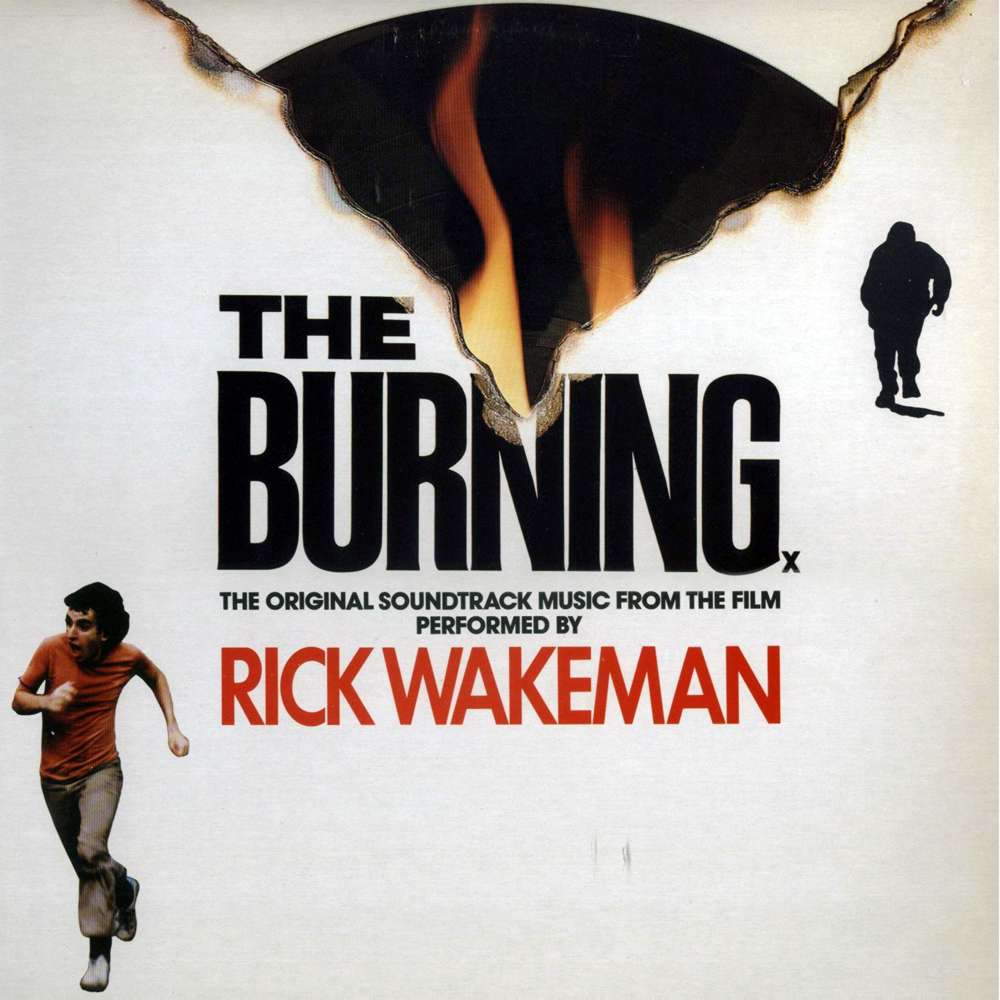
Prog rock legend and former Yes-man Rick Wakeman startled a lot of people when he scored The Burning, a berserk 1981 slasher film most notable for its often-censored Tom Savini gore effects and early appearances by actors like Holly Hunter, Jason Alexander and Fisher Stevens. (Trivia note: it was also the first official Miramax release.) The electronic score is pretty wild and a far cry from the Halloween knock-off you might expect; there's even a narrated track relating the spooky backstory of Cropsy, the disfigured gardener running amuck with a pair of gardening shears.

However, Wakeman had already dabbled a bit in the soundtrack arena six years earlier with Lisztomania, arguably the wildest Ken Russell movie ever. In this amped-up successor to Tommy, Roger Daltrey stars as the popular composer whose bedroom conquests and long-running feud with Richard Wagner turn into opulent setpieces involving vampirism, a fascist Frankenstein monster stomping around with a machine gun, Ringo Starr as the Pope, and an organ-powered rocketship filled with scantily-clad women. Your average biopic this ain't. The soundtrack adapts several famous Liszt themes and climaxes with the rousing "Peace at Last," presented here in both its album and extended movie versions. Russell and Wakeman later reteamed in the mid-'80s for another classically-influenced score, Crimes of Passion, which is far more readily available.

The Burning
1. Campfire Story
2. The Burning
3. The Fire
4. Doin' It
5. Devil's Creek Breakdown
6. The Chase
7. Shear Terror
8. Theme From The Burning
9. The Chase Continues (Po's Plane)
10. Variations On The Fire
11. Shear Terror And More

Lisztomania
1. Rienzi (Chopsticks Fantasia)
2. Love's Dream
3. Dante Period
4. Orpheus Song
5. Hell
6. Hibernation
7. Excelsior Song
8. Master Race
9. Rape, Pillage & Clap
10. Funerailles
11. Free Song
12. Peace At Last
13. Peace At Last (Movie Version)

Labels: ,

Monday, July 24, 2006

Grace Jones and the Corn Kids

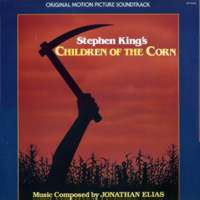
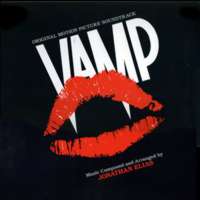
New World Pictures got a lot of mileage out of composer Jonathan Elias, who collaborated with Yes on the ill-received Union and, apparently, now makes a good living scoring TV commercials. He started off strongly in 1984 with the multi-sequeled Stephen King adaptation, Children of the Corn, offering a catchy, creepy musical tapestry much stronger than the film for which it was written; the eerie main theme feels a bit like an amped-up version of The Amityville Horror. After scoring the '80s teen favorite Tuff Turf, he returned to horror with the cult favorite Vamp in 1986, writing a more abstract, darkly ambient score suited to the film's nocturnal terrors and Grace Jones bloodsucking. (And if you're looking for that Grace Jones song played during her stage act in the movie, it's "Seduction Surrender" from Bulletproof Heart.) Elias' subsequent credits include Parents,Two Moon Junction, and Leprechaun 2, a sure sign of diversity if there ever was one.

Labels: ,

Monday, July 17, 2006

Haunted

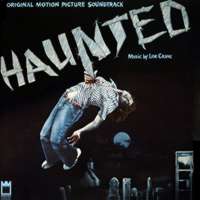
You'd have to look far and wide to find a horror soundtrack more overwrought than 1977's Haunted, a regional drive-in obscurity from Arizona that disappeared from video shelves years ago. The film stars Aldo Ray, Virginia Mayo and Virgin Witch's Ann Michelle in yet another one of those "ticked-off dead supernatural woman comes back from the grave to get revenge centuries later" stories, this time with an Indian tribeswoman killed off during the Civil War doing the honors. Or does she? The music score by Lor Crane (who?) comprises half the album and is pretty standard late-'70s stuff (mostly sounding like Hardy Boys outtakes). On the other hand, the songs on here are incredible, kicking off with the jaw-dropping "Indian Woman"-- a 3-minute howler that manages to encapsulate the entire backstory of the film... badly: "Revenge is her only friend / Indian woooman! / Loving, hating, coming back to clear her name. / Indian woman! / They took her life for gold, now she's searching, tracking down the ones to blame. Indian woman!" Prepare to be amazed.

Labels: ,

Tuesday, July 11, 2006

18 Feet of Gut-Crunching, Musical Terror!

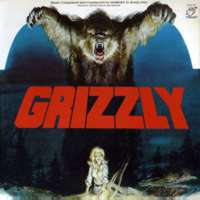
One of the most beloved '70s drive-in nature-amok outings, Grizzly proved to be a big hit for late director William Girdler, the cracked genius who also gave the world The Manitou and Day of the Animals. Along with stalwarts Christopher George, Andrew Prine and Richard Jaeckel running around in the woods firing bazookas at man-eating wildlife, the film features a melodic score by composer Robert O. Ragland, who had already done The Thing with Two Heads and Girdler's Abby. The soundtrack is pure '70s nature-disaster music movie heaven, with a poppy theme song ("What Makes a Man a Man?"), a tender love theme, and lots of creepy, sinister music whenever the bear (or its furry stand-in) appears.

Labels: ,

Wednesday, July 05, 2006

The Empire Pictures Sound

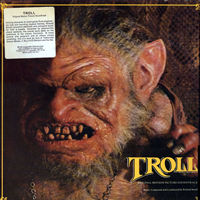
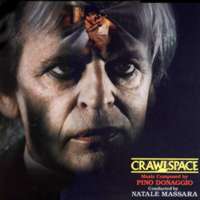
Before starting Full Moon Entertainment, Charles Band and company spent most of the '80s releasing horror and sci-fi titles under the banner of Empire Pictures. Most people remember them for Stuart Gordon classics like Re-Animator and From Beyond, but the rest of their fare is pretty unusual as well. Here we celebrate two lesser-known, very different scores from the golden Empire year of 1986, Richard Band's Troll (the one where Seinfeld's Julia Louis-Dreyfus becomes a wood nymph and Sonny Bono turns into a tree) and Pino Donaggio's Crawlspace (with Klaus Kinski as a crazy ex-Nazi who stalks women in his boarding house).
The Band score is an atmospheric, choir-heavy piece divided into five parts -- or as the cover label puts it, "Utilizing elements of avant garde Euro-progressive rock and haunting musical themes, Richard Band's evocative electronic and orchstral score for Troll is superb. Accented by otherworldly choral sections, the overall work takes on the ambiance of the classic Fantasia. At times serene and poignant and at other times simply unsettling, this is a work for fans of Tangerine Dream, Magma, Il Balleto di Bronzo and the like." Got that? [NOTE: link now removed as this has been commercially released.]

On the other hand, the Donaggio score is pure horror all the way, with a heavy emphasis on synths and a haunting main theme that really comes to fruition in the standout final track, "Martha's Lament / End Titles" (whose Hebrew lyrics are a memory of the horrors at Auschwitz). Incidentally, this was the second of Donaggio's three collaborations with David Schmoeller, also including Tourist Trap and Catacombs.

Labels: , ,

Thursday, June 29, 2006

Apocalypse Tomorrow

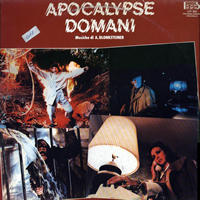
Fantastically funky music from the 1980 Italian action/horror opus Apocalypse Domani (a.ka. Cannibal Apocalypse, Invasion of the Flesh Hunters, and about 10 other titles) by drive-in legend Antonio Margheriti. The movie follows a trio of Vietnam vets who terrorize the streets (and sewers) of Atlanta after suffering the delayed effects of a virus that drives its victims to take a bite out of other people. Though composer Alessandro Blonksteiner contribued five cues to Walter Rizzati's amazing score for House by the Cemetery, this remains his only full, solo film score; a pity, as it's lots of fun. From sweet and jazzy Morricone-inspired melodies ("Jane," "Impossible Love") to early '80s jazz/soul mash-ups ("Apocalypse," "Station Service"), the score is never boring and has a similar vibe to other Italian horror favorites from the same period. Nice use of bongos, too. Break out the munchies and enjoy...

Labels: , ,