Wednesday, January 03, 2007

Hold Your Breath

The first English-language film from director Luc Besson (La Femme Nikita), 1988's The Big Blue, had a notoriously troubled release history around the world. Intended as an eye-popping ode to the ocean as seen through the eyes of two "free divers" who push each other to dangerous extremes, it was released in the U.S. in a drastically edited, PG-rated version with a happy ending and a new score by Bill Conti, replacing the original one by Eric Serra. Eventually the original cut surfaced in theaters and on DVD, while Serra's score has been issued countless times in numerous variations on CD. However, the beautiful Conti score is actually one of his very best (with an unforgettable main theme) but sadly never got a commercial release anywhere; a few samples have turned up on compilations, but here's the whole thing for listening pleasure. Dive in...

Labels:

Thursday, December 21, 2006

Ho, Ho, Ho!

For the last pre-Christmas post, here's the peppy Henry Mancini score for the biggest Christmas flop of all time, 1985's Santa Claus: The Movie. Producer Richard Salkind (Superman) thought he had a perennial hit on his hand thanks to a lavish budget and a cast featuring Dudley Moore (as an elf) and John Lithgow, but alas, 'twas not meant to be. The movie's kind of fun in the right frame of mind, though, and Mancini's score hits all the right notes while incorporating a few carolling standards into the mix. Of course, this being the mid-'80s, Sheena Easton even pops up for a singing cameo, too. Happy holidays, one and all!

Santa Claus: The Movie
1. Main Title: Every Christmas Eve and Santa's Theme
2. Arrival Of The Elves
3. Making Toys
4. Christmas Rhapsody
5. It's Christmas Again
6. March Of The Elves
7. Patch, Natch!
8. It's Christmas (All Over The World) (with Sheena Easton)
9. Shouldn't Do That
10. Sleigh Ride Over Manhattan
11. Sad Patch
12. Patch Versus Santa
13. Thank You, Santa

Labels:

Wednesday, December 13, 2006

Yug Yug

Here's one for all you kids of the '80s. During the early part of that decade, movie-theme-disco-maestro Meco was still cranking out albums offering his own dancefloor-friendly interpretations of the biggest box office hits, and let's just say that if disco hadn't died already, this 1983 album surely would have singlehandedly killed it off. Once again he returns to Star Wars territory courtesy of two, err, "vocal" numbers from Return of the Jedi (both completely omitted from George Lucas' dunderheaded "Special Edition" version years later). First up is "Ewok Celebration," a jaw-dropping dance version of the climactic Ewok song complete with, yes, a Star Wars rap. I really couldn't make this up. Then you get a pop version of that Jabba the Hut number, "Lapti Nek." But wait, there's more! Aiming for every demographic possible, the album also includes a cover of Michael Sembello's "Maniac" (from Flashdance), another extended Star Wars suite, and... well... just look at the tracklist for the rest, and prepare to be amazed.

Labels: ,

Monday, November 27, 2006

Sex Thief

One of the earliest and most interesting installments in the wave of big studio "erotic thrillers" that eventually swallowed up most of the '90s, 1984's Thief of Hearts doesn't get mentioned too often these days in the wake of bigger, more sensationalistic titles like Fatal Attraction and Basic Instinct; it's definitely a better film though and is, believe it or not, genuinely sexy. (It's also one of the very few Jerry Bruckheimer productions that won't induce migraines.) The story follows a bored married socialite who winds up having an affair with a swarthy cat burglar who, it just happens, is the same guy who breaks into her house and reads her diaries. Oops. The effective and wonderfully '80s score by German composer Harold Faltermeyer was his first big American gig and landed him some bigger future assignments including Beverly Hills Cop and Fletch. The soundtrack is also peppered with a few pop tunes including the semi-hit single (whose steamy music video got it shoved to late night play on MTV) and even an appearance from actress/singer Elizabeth "E.G." Daily (Better Off Dead).

Labels: ,

Thursday, October 19, 2006

Be Positive

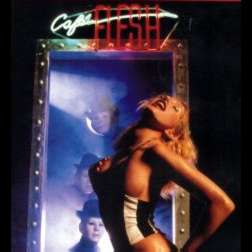
Arguably the last masterpiece of theatrical adult filmmaking, 1982's Café Flesh became a full-fledged midnight cult hit thanks to its striking blend of sci-fi, social satire, and, of course, sex, usually with people dressed up as rats or pencils. (Really.) The story follows the unfortunate souls in the audience and onstage at Café Flesh, a post-apocalyptic club where the few remaining humans with functioning libidos are forced by law to perform for everyone else. Dark humor and numerous plot twists ensue. Scream queen Michelle Bauer stars under the name "Pia Snow," though reports differ on whether she used a body double during some of the big finale. The mad genius behind this one is Stephen Sayadian (under the name "Rinse Dream"), who had already made the almost-as-good Nightdreams and went on to semi-mainstream cultdom with 1990's Dr. Caligari. The outstanding new wave instrumental score comes from the eclectic Mitchell Froom (ex-husband of Suzanne Vega), who went on to fame with acts like Crowded House. (Too bad he'll always bear a certain badge of shame for inflicting the worst James Bond theme ever upon the world, Sheryl Crow's "Tomorrow Never Dies.") Here's the full score (long out of print under the title The Key of Cool), sequenced to play in the original film order and expanded to include some of the more memorable monologues and dialogue exchanges from the film.

Café Flesh
1. Thrill Factor
2. Welcome To Café Flesh
3. Fruto Prohibito

4. Strangle A Girl With Love
5. We Don't Dream
6. Pleasure Is A Widow Maker
7. Face Down
8. The Skull in The Cage
9. Miami Priests
10. Moms
11. Blue Lips
12. Be Positive
13. The Key Of Cool
14. Press The Panic Button
15. Jungle Of Cities
16. Patio
17. The End Of The Line
18. Zip Code
19. Thrill Factor (Reprise)

Labels: ,

Tuesday, October 17, 2006

See No Evil

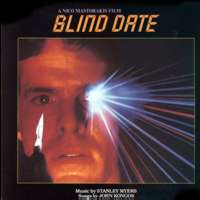
Okay, let's talk about Nico Mastorakis. Greece's premiere master of exploitation, he shocked audiences with his 1975 debut film, Island of Death, and finally went almost-mainstream in 1984 with Blind Date, featuring his first "name" cast. Joseph Bottoms stars as a recently blinded man outfitted with a fancy computer "seeing" machine who goes up against a serial killer, but the sci-fi crowd tends to ignore the plot thanks to the fact that two Star Trek actresses, Kirstie Alley and Marina Sirtis, get naked. (And check out the DVD for an even more gratuitous "love scene" outtake reel.) This film marked Mastorakis' first collaboration with composer Stanley Myers; they later reteamed for such diverse films as The Zero Boys, The Wind, Nightmare at Noon, and The Time Traveller. The score is pretty typical '80s Myers (you can definitely see how much he influenced frequent musical partner Hans Zimmer), which means it's often catchy and atmospheric, though the occasional maudlin songs by John Kongos may have '80s-intolerant listeners fleeing the room. Synths were performed by composer Richard Harvey, who already worked with Myers on The Martian Chronicles. A big thanks to ISBUM for providing the original vinyl for this transfer!

Also, on the video news front, fans of wild late-'60s cinema might be interested to know that, without any fanfare at all, Fox is releasing two very rare, perverse Michael Caine films, Deadfall (featuring a fine John Barry score) and The Magus, on DVD today. Grab 'em while you can!

Labels: ,

Monday, October 09, 2006

Rise and Shine

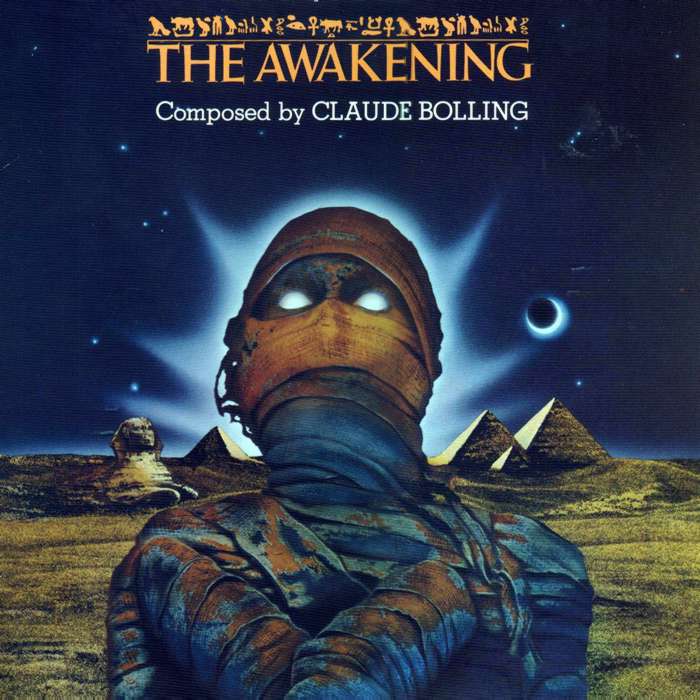
One of the more high-profile studio horror films in 1980, The Awakening quickly ticked off a lot of mummy fans with its poster image of a cloth-wrapped fiend emerging from a pyramid. However, this adaptation of Bram Stoker's The Jewel of Seven Stars (previously filmed by Hammer as Blood from the Mummy's Tomb) -- meant to cash in on the still-active public interest in King Tut -- skimps on the mummy mayhem, instead focusing on a series of bloody deaths and possessions unleashed after Charlton Heston opens an Egyptian princess' sacreb tomb. This was the feature directorial debut of Mike Newell, who went on to a series of high-profile British dramas and comedies before eventually returning to fantastic cinema with Harry Potter and the Goblet of Fire. One of The Awakening's strongest assets is its fine, lyrical score by jazz favorite Claude Bolling, who turns in a rich orchestral work with a beautiful, shimmering main theme.

The Awakening
1. Main Title
2. She Has A Name
3. Night Drive
4. The Big Revelation & Descent

5. Kara Takes Control
6. The Eclipse
7. Margaret's Decision / The Mirror
8. Corbeck's Party
9. Inside Kara's Tomb
10. Canopic Jars
11. Jane's Discovery / Jane's Betrayal
12. The Big Drop
13. The Ceremony
14. Queen Kara

Labels: ,

Thursday, October 05, 2006

Who Was That Masked Man?

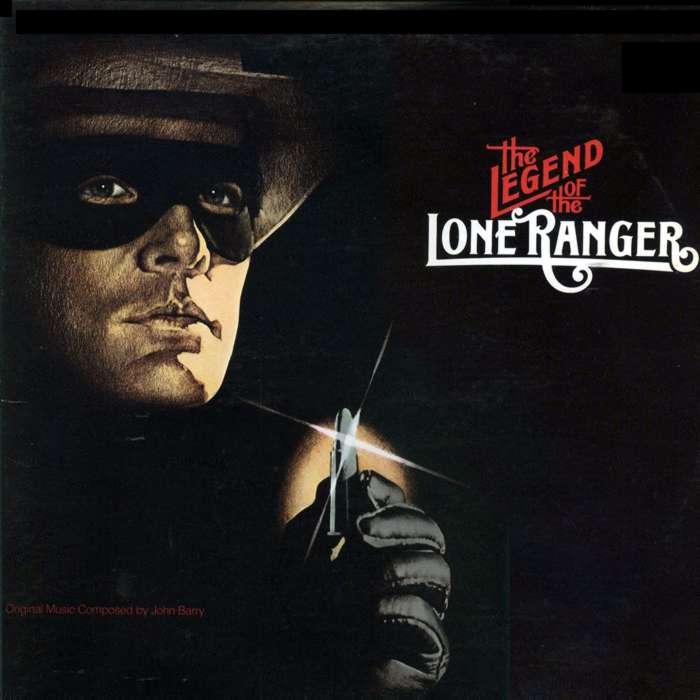
And so this week's John Barry trilogy comes to a close... One of the biggest box office duds of its decade, The Legend of the Lone Ranger was intended as a big prestige summer release to appeal to the action crowd in 1981; unfortunately, a different kind of nostalgia piece called Raiders of the Lost Ark quickly trounced it. Many laid the blame on newcomer lead Klinton Spilsbury, a football player whose performance had to be redubbed in post by James Keach; however, it did earn some loyalty among afternoon HBO viewers thanks to constant screenings for years afterwards. Always willing to give his all even when the movie's a flop (see: The Scarlet Letter, Mercury Rising, etc.), John Barry cooks up a series of rousing action cues with a pleasant western feel, kind of a dry run for his later work on Dances with Wolves. The occasional spoken bits by Merle Haggard are jarring but kind of work in the actual film.

The Legend of the Lone Ranger
1. The Man In The Mask (Main Title) (Vocal: Merle Haggard)
2. The Legend Begins
3. John And Amy Meet
4. The Valley Chase
5. Brothers
6. The Cavandish Gang Strikes
7. The Man In The Mask (Instrumental)
8. The Breaking Of Silver
9. Ambush
10. Dynamite
11. The Final Attack
12. William Tell Overture
13. The Man In The Mask (End Title)

Labels: ,

Monday, October 02, 2006

Feminist Fear

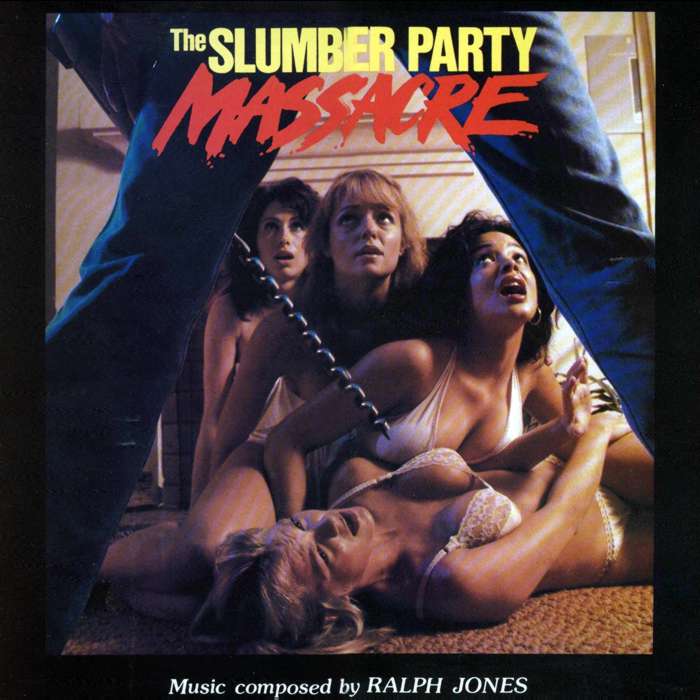
Sometimes, Mr. Freud, a drill is just a drill... Lots of critics have spilled ink over the years trying to find clever gender-related messages in 1982's indie slasher hit, The Slumber Party Massacre, which was written and directed by two women, namely noted feminist writer Rita Mae Brown (Rubyfruit Jungle) and Amy Jones (future writer of Indecent Proposal and Beethoven -- yes, the dog movie). The movie's packed with the usual gore, T&A, and awful acting, but it's fast-paced and full of retro goodness; for any deeper meaning than that, well, you're on your own. The nutty electronic music score is loaded with pseudo-organ riffs that would be more at home in a William Castle movie, and there's even a seven-minute droning freakout piece ("Meditation on the Mind of Russ Thorn"-- that's the killer, natch). It was composed by Ralph Jones, presumably related to the director somehow (brother? husband?), who went to score her Love Letters for Roger Corman as well. Attentive viewers may also note that the actual movie comes sprinkled with a bit of Pino Donaggio's Piranha score for some reason, too. It later inspired two unrelated sequels, both of them completely insane.

The Slumber Party Massacre
1. Main Title
2. Stalking The High School
3. Confrontation In The Gymnasium
4. Russ Dreams
5. Snail Hunt
6. Valerie Does Battle
7. Uninvtied Guest
8. Meditation Of The Mind Of Russ Thorn
9. End Titles

Labels: ,

Friday, September 29, 2006

From Innocence - To Fear - To Rage!

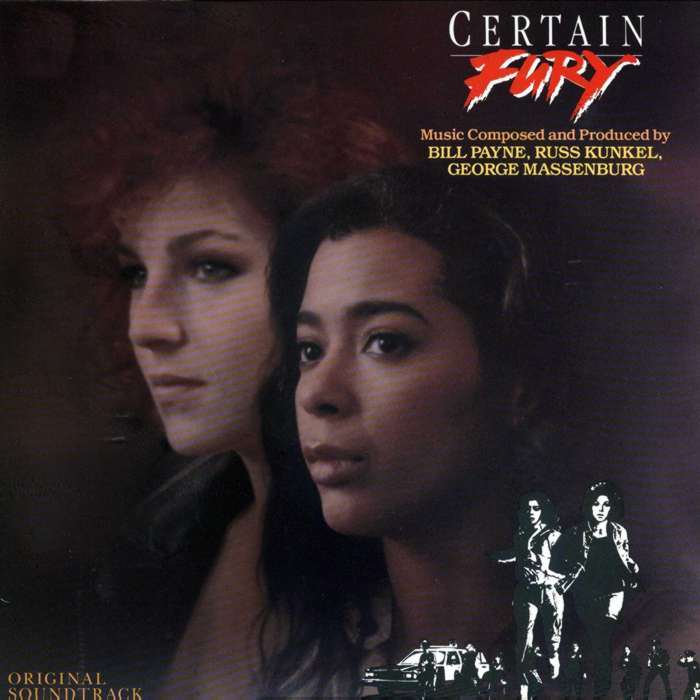
"Two Academy Award Winning Stars," Tatum O'Neal and Irene Cara, teamed up in 1985 for Certain Fury, a trashy female take on The Defiant Ones (or, if you prefer, a thinly-disguised remake of Black Mama, White Mama), directed by Stephen Gyllenhaal (Jake and Maggie's dad). As with several other '80s action scores (see Raw Deal), the music is the handiwork of three composers -- in this case, Bill Payne, George Massenburg, and Russ Kunkel, who all returned again for Smooth Talk and not much else. The main theme ("Fire in Her Eyes") is the most memorable feature, though the rest is also a bit more layered and interesting than the usual synth-action stuff you might expect.

Certain Fury
1. Theme From Certain Fury / Scarlet And Tracy's Song
2. Tracy Into Tears / Scarlet's Theme / Crystal's Hit
3. The Cab Ride
4. The Drowning
5. Escape To Nowhere
6. Final Donfrontation / Fire In Her Eyes
7. Lost And In Trouble
8. Tracy's Childhood
9. Going Down For Air

10. Scarlet Saves Tracy From Fire
11. Spire-Freeman Theme
12. They Think We're Dead
13. Sniffer's World
14. Scarlet And Loverboy Talk / How Do You Erase All Of This
15. Sniffer You're A Freak / Take One Step And I'll Kill You

16. Welcome To The City / Fire In Her Eyes

Labels:

Monday, September 25, 2006

Music for Muffy

Okay, it's not even close to April right now, but to get folks into the Halloween spirit a little early, here's Charles Bernstein's excellent, diverse little score for one of the most underrated '80s horror films, April Fools' Day (which is usually classified as a slasher film, even though it's not at all). Nice direction by the much-missed Fred Walton (When a Stranger Calls), a dream '80s cast including Amy Steel and Deborah Foreman, and that cool twist ending make this highly recommended. Later ripped off shamelessly in 2005 by the painfully stupid Cry_Wolf; stick with the original.

Labels: ,

Friday, September 08, 2006

The Power of Chris Compels You

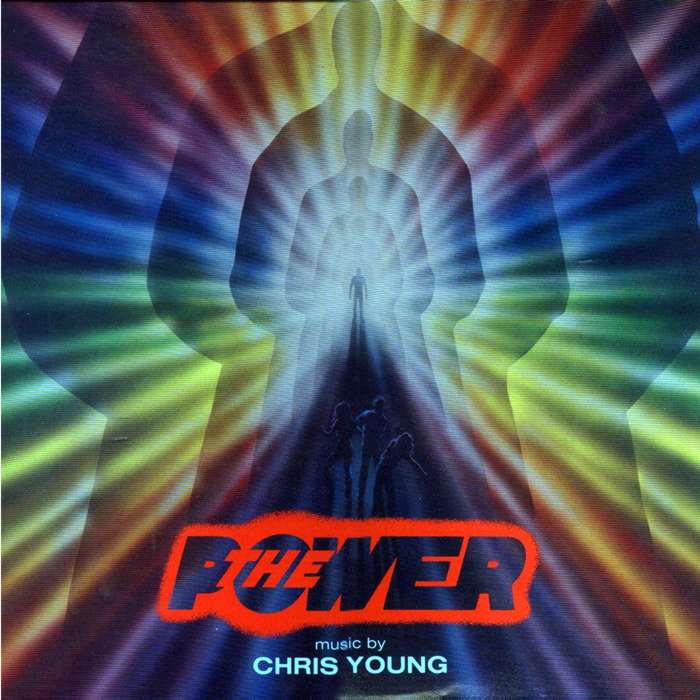
One of the best and busiest current American score composers, Christopher Young has churned out an amazing body of work for films such as Hellraiser, The Grudge, Species, and Flowers in the Attic. However, he got his start with two low-budget genre films for Stephen Carpenter and Jeffrey Obrow, 1982's The Dorm that Dripped Blood (a.k.a. Pranks) and 1984's The Power; while the former has subsequently appeared on CD, The Power has remained out of reach for most listeners. It's very strong for a second score, from the melodic opening water music theme to the driving suspense cues at the end. Note that Track 16 also offers an early example of Young's fondness for goofy puns in his track titles. The film itself, basically a more violent remake of that Brady Bunch Hawaiian episode, follows the mayhem caused by an evil Aztec doll that controls its owners. Tough to find on video now, it's an interesting artifact from the days of homegrown theatrical horror films.

The Power
1. Theme From The Power
2. Main Title
3. Desert Twilight
4. Transformation
5. A Secret Revealed
6. Quest For The Idol
7. Innocent Obsession
8. Evil Passage
9. The Possessed
10. Destacatyl
11. Desperate Search
12. Julie's Magic
13. Night Magic
14. Midnight Excursion
15. Tombstones And Talismans
16. Jerry's Gold Myth
17. The Power

Labels: ,

Tuesday, August 29, 2006

A Different Kind of Animal

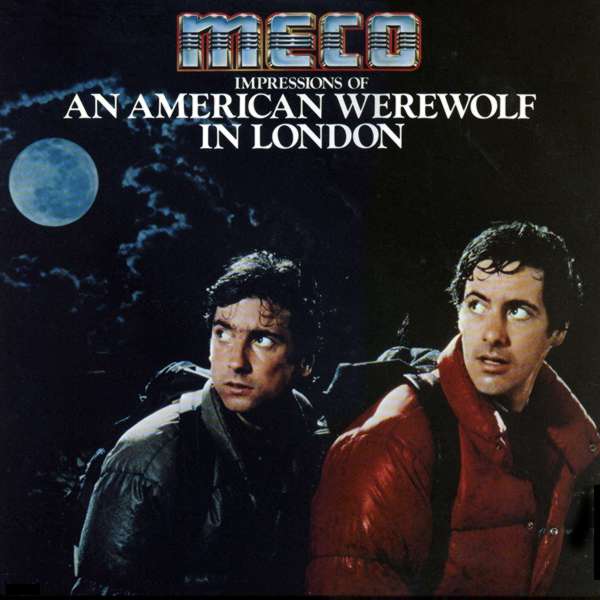
And the beat goes on... Near the end of the disco era, dancefloor sensation Meco (real name: Meco Monardo) was still riding high on his funked-up versions of music from Star Wars, The Empire Strikes Back, Close Encounters of the Third Kind, and a wild concept album based on The Wizard of Oz. Meanwhile John Landis was set to release his first all-out horror film in 1981, An American Werewolf in London, whose soundtrack consisted of some tongue-in-cheek "moon" rock standards along with about five minutes of incidental music by Elmer Bernstein. Faster than you can say "A naked American man stole my balloons," Landis and the execs at Polygram resolved the problem of releasing a soundtrack by bringing in Meco to pad the whole thing out, tweaking the songs with a few werewolf sound effects, tossing in some extra rock tracks, and adding two original "power dance rock" werewolf songs at the end. The result is a solid contender for the weirdest horror soundtrack ever released.

An American Werewolf in London
1. Blue Moon
2. You Gotta Hurt Me
3. Moon Dance
4. The Boys
5. Bad Moon Rising
6. No More Mr. Nice Guy
7.
Werewolf (Loose in London)
8. Werewolf Serenade

Labels: ,

Friday, August 18, 2006

They Know Who You Are

One of the more interesting non-slasher '80s horror films, John Schlesinger's The Believers was promoted as the next great modern urban horror film in the tradition of The Exorcist. Unfortunately some much-discussed last minute edits blunted the story (and ticked off a lot of Santeria practitioners in the process), but the end result is still effective and creepy if you go along with it. Martin Sheen stars as a recently widowed Manhattanite who becomes the target of a malicious cult, with sweaty cop Jimmy Smits warning him of impending danger. Helen Shaver also stars and has a scene involving her complexion no viewer ever forgets. The powerful, very scary score is by J. Peter Robinson, a talented and still-busy composer who had just finished The Wraith and The Gate. Don't listen to it alone!

The Believers
1. Jogging / Cal's Theme / Safety
2. Sacrifice (Main Title)
3. Discovery In Central Park
4. Jessica / Hospital / Cal And Jessica
5. Toyland
6. Cal Remembers Lisa
7. Theatre
8. Sanctuary
9. Cal Drives To McTaggart's / McTaggart's Death
10. Boils / Spiders
11. Retribution And End Title

Labels: ,

Tuesday, August 15, 2006

The Musical World of Menahem Golan

Okay, back to Cannon Films for a minute. One of the two founders, Menahem Golan, was a producer/director who got his start directing films in Isreal, as well as the 1969 British sexploitation film What's Good for the Goose during his directorial training in England. Upon returning to his homeland, he decided to mount a big-scale musical in the tradition of Fiddler on the Roof; the result was 1974's Kazablan, which was shot in both Hebrew and English versions and was picked up by MGM for international distribution. Future Cannon composer Dov Seltzer (The Ambassador) wrote the music, and while the vocal numbers are pretty standard musical fare (upbeat and moderately catchy), the real standout is three funktastic intstrumentals: "Chassidic Rock," "Getting Dressed Ballet," and especially "Construction Rock Ballet," which could have easily come from a top-rung black action or Bollywood film from the period.

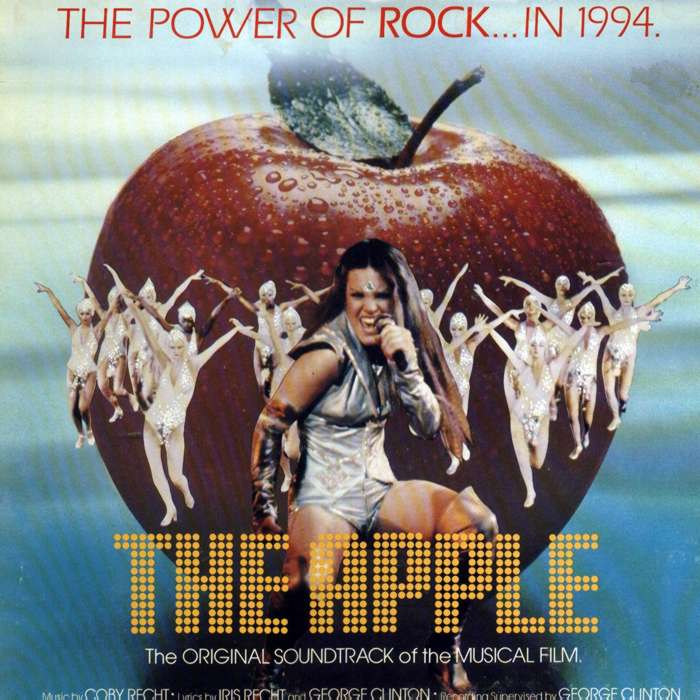
After officially buying Cannon Films from its British founders in 1979, Golan stepped behind the camera again for another colorful, widescreen musical spectacular, this time shot in Germany with a bizarre international cast including newbie Catherine Mary Stewart (Night of the Comet), future BBC staple Grace Kennedy, Joss Ackland (Lethal Weapon 2), and the wonderfully hammy Vladek Sheybal (From Russia with Love) as Mr. Boogalow, a satanic record producer who controls the world of pop culture in the futuristic year of 1994. The end result, The Apple, appalled audiences worldwide with its glam-rock fusion of biblical symbolism, dirty disco, and dieties descending from the sky in pimpmobiles, though it has more recently become a perpetual revival house and midnight movie favorite. The, uh, unique songs are the brainchild of Israeli popster Coby Recht and American composer George S. Clinton (who also appears onscreen as a mind-controlled reporter), later known for much bigger titles like Austin Powers, Wild Things and Mortal Kombat. Xanadu ain't got nothin' on this one, baby.

Kazablan
1. Overture
2. Men Of Respect
3. We Are All Jews
4. Chassidic Rock
5. There's A Place
6. Democracy
7. Construction Rock Ballet
8. Jaffa
9. Hey, What's Up!
10. Rosa, Rosa
11. Kazablan (Get Off My Back)
12. Getting Dressed Ballet
13. Brith Milah Pageant


The Apple
1. BIM
2. Universal Melody
3. Made For Me
4. Showbizness
5. The Apple
6. How To Be A Master
7. Speed
8. Where Has Love Gone
9. Cry For Me
10. Coming
11. I Found Love
12. Child Of Love
13. Creation

Labels: , , ,

Friday, August 11, 2006

Basketball with BB

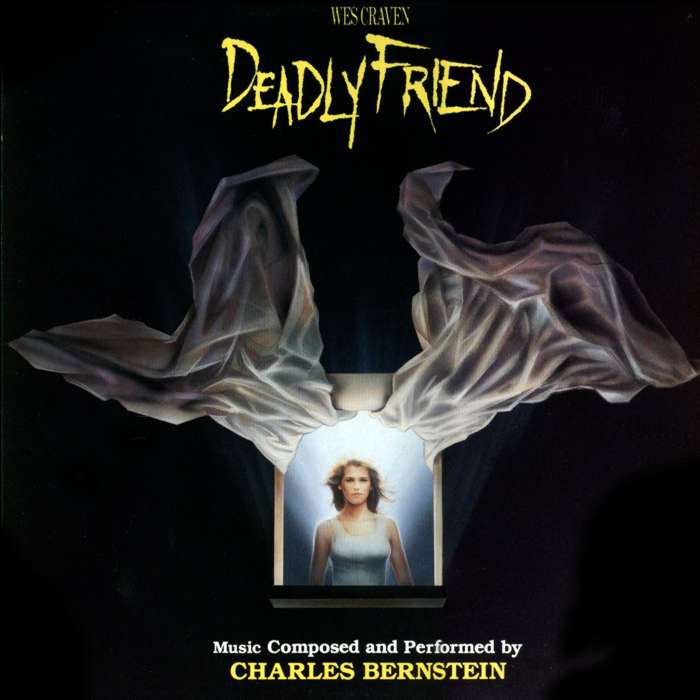
A number of folks have been requesting music from the underrated Charles Bernstein, so here's the first one to make you happy. Way back in 1986, Bernstein and director Wes Craven were fresh off the iconic A Nightmare on Elm Street and teamed up again for Craven's first real studio film, Deadly Friend. The story follows the attempts of a tormented teen scientist (Matthew Laborteaux) to revive the pretty dead girl next door (future skating celeb/gossip favorite Kristy Swanson) by implanting a chip from his pet robot, BB. Not surprisingly, things go very badly afterwards. Unfortunately Warner Brothers wasn't too keen on this tragic, mildly creepy teen love story and insisted on a number of ridiculous changes, including a junky, nonsensical ending. The final result has its share of tampering issues (heck, what '80s Craven movie doesn't?) but still has its good points, namely Bernstein's appropriately electronic-heavy score and a classic gore gag involving cranky Anne Ramsay and a very powerful basketball. For some reason a good chunk of music (including the opening titles!) never made it onto the soundtrack, so if that much-promised CD release ever comes to pass, let's hope it's an expanded special edition. In the meantime, enjoy this tasty dose of '80s synth-horror... and brace yourself for "BB's Song." (Oh yeah, and I was dismayed to just discover my LP of Bernstein's excellent Gator score is in less-than-prime condition; if anyone has a clean rip handy, please share!)

Deadly Friend
1. BB's Theme
2. BB's Song
3. Love Waves
4. Halloween
5. BB's Funeral
6. Hot Head In Bed
7. Back Porch Romance
8. Elvira, Mad Again
9. Nutcracker Street
10. Daddy Dearest
11. Slam Dunk
12. BB Gunned
13. Goodnight Kiss
14. Change of Minds
15. Just Choking
16. Born Again

17. Spotting Pop
18. Body Snatchers

Labels: ,

Wednesday, August 09, 2006

Two Evil Cats

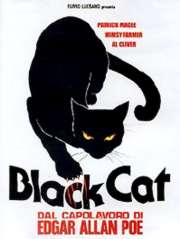
Meow! Here's a strange anomaly in film score history -- an Italian composer who scored the same horror story twice within a decade. It all started when Pino Donaggio (taking a break from his stampede of Brian De Palma films) was hired by the very busy Lucio Fulci in 1981 to score his "freely adapted" version of Edgar Allan Poe's short story, "The Black Cat." Patrick Magee stars as a grizzled old coot who records ambient noises in graveyards and owns a malicious pussycat capable of instigating gory deaths in a small Scottish village. Enter nosy reporter Mimsy Farmer and detective David Warbeck, who try to put a stop to all the feline antics before they're next. It all ends with some impromptu masonry and a yowling kitty, of course. The string-heavy score is highlighted by a terrific main title theme that nicely evokes the Scottish setting and features some of Donaggio's strongest suspense work. Though it was never released, the complete score is presented here from the original recording sessions; sound quality is a bit erratic here and there, but hey, where else are you gonna hear it?
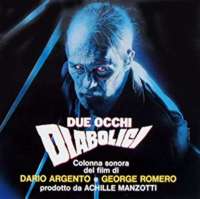
Fast forward to 1990, as Dawn of the Dead producer Dario Argento decided to reunite with George Romero for a two-part Poe anthology film, Two Evil Eyes. While most viewers agree that Romero's "The Facts in the Cast of M. Valdemar" is a sluggish mess, Argento's version of "The Black Cat" succeeds thanks to an avalanche of wild Poe references and a solid performance by Harvey Keitel. Not surprisingly, Donaggio's score is divided into two halves with the much stronger Argento segment coming first. Highlights include the main kid's choir theme ("Dreaming Dreams"), a spooky medieval piece ("Adust Sponsus"), and even a swirling cue inspired by Philip Glass ("The Gothic Town"). Argento must have been pleased with the results, as he used Donaggio again for Trauma and Do You Like Hitchcock? Incidentally, at least one other Italian composer has performed the same twice-in-a-decade feat with one horror story; can you name him?

Labels: , , , ,

Monday, August 07, 2006

Cannon's Warriors

After paying tribute to the much-missed Empire Pictures, it's now time to turn to the undisputed kings of '80s drive-in insanity, Cannon Films. Begun in the 1970s by Menahem Golan and Yoram Globus, Cannon really hit its stride with a string of action films featuring ninjas, vigilantes, and of course, Chuck Norris and Charles Bronson. One of their weirder outings was the 1983 revenge flick Young Warriors, starring James Van Patten, Ernest Borgnine, Richard Roundtree, Lynda Day George, and a young Linnea Quigley. Best of all, it was directed by the amazing Lawrence D. Foldes, who brought you the cannibal caveman classic Don't Go Near the Park and the Linda Blair actioner Nightforce. The score by Rob Walsh (Revenge of the Ninja) is pretty much perfect '80s action music, with a rousing A-Team-style main theme ("American Youth") guaranteed to make you grin like an idiot and even a sinister version of "The Star-Spangled Banner" thrown in for good measure.

Labels: ,

Wednesday, July 26, 2006

Burn, Baby, Burn

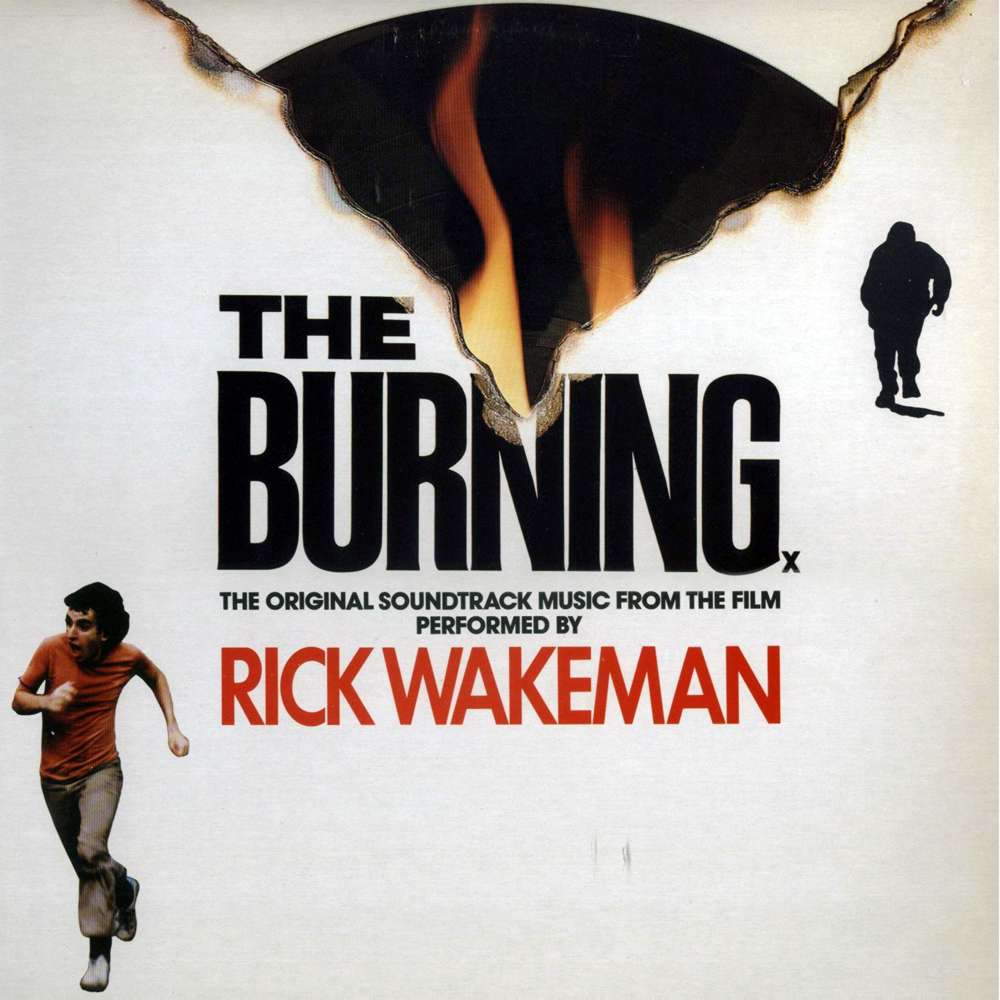
Prog rock legend and former Yes-man Rick Wakeman startled a lot of people when he scored The Burning, a berserk 1981 slasher film most notable for its often-censored Tom Savini gore effects and early appearances by actors like Holly Hunter, Jason Alexander and Fisher Stevens. (Trivia note: it was also the first official Miramax release.) The electronic score is pretty wild and a far cry from the Halloween knock-off you might expect; there's even a narrated track relating the spooky backstory of Cropsy, the disfigured gardener running amuck with a pair of gardening shears.

However, Wakeman had already dabbled a bit in the soundtrack arena six years earlier with Lisztomania, arguably the wildest Ken Russell movie ever. In this amped-up successor to Tommy, Roger Daltrey stars as the popular composer whose bedroom conquests and long-running feud with Richard Wagner turn into opulent setpieces involving vampirism, a fascist Frankenstein monster stomping around with a machine gun, Ringo Starr as the Pope, and an organ-powered rocketship filled with scantily-clad women. Your average biopic this ain't. The soundtrack adapts several famous Liszt themes and climaxes with the rousing "Peace at Last," presented here in both its album and extended movie versions. Russell and Wakeman later reteamed in the mid-'80s for another classically-influenced score, Crimes of Passion, which is far more readily available.

The Burning
1. Campfire Story
2. The Burning
3. The Fire
4. Doin' It
5. Devil's Creek Breakdown
6. The Chase
7. Shear Terror
8. Theme From The Burning
9. The Chase Continues (Po's Plane)
10. Variations On The Fire
11. Shear Terror And More

Lisztomania
1. Rienzi (Chopsticks Fantasia)
2. Love's Dream
3. Dante Period
4. Orpheus Song
5. Hell
6. Hibernation
7. Excelsior Song
8. Master Race
9. Rape, Pillage & Clap
10. Funerailles
11. Free Song
12. Peace At Last
13. Peace At Last (Movie Version)

Labels: ,

Monday, July 24, 2006

Grace Jones and the Corn Kids

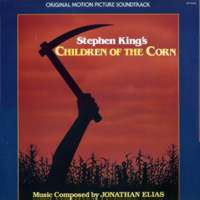
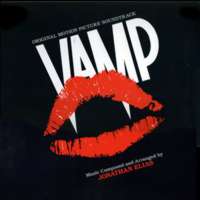
New World Pictures got a lot of mileage out of composer Jonathan Elias, who collaborated with Yes on the ill-received Union and, apparently, now makes a good living scoring TV commercials. He started off strongly in 1984 with the multi-sequeled Stephen King adaptation, Children of the Corn, offering a catchy, creepy musical tapestry much stronger than the film for which it was written; the eerie main theme feels a bit like an amped-up version of The Amityville Horror. After scoring the '80s teen favorite Tuff Turf, he returned to horror with the cult favorite Vamp in 1986, writing a more abstract, darkly ambient score suited to the film's nocturnal terrors and Grace Jones bloodsucking. (And if you're looking for that Grace Jones song played during her stage act in the movie, it's "Seduction Surrender" from Bulletproof Heart.) Elias' subsequent credits include Parents,Two Moon Junction, and Leprechaun 2, a sure sign of diversity if there ever was one.

Labels: ,